Opens May 23 Through January 2028
Imagine stepping into a world where blue frogs cling to dripping leaves, piranhas swirl in dark water, and the air smells like rain-soaked earth. For the first time at the Oregon Coast Aquarium, now you can.
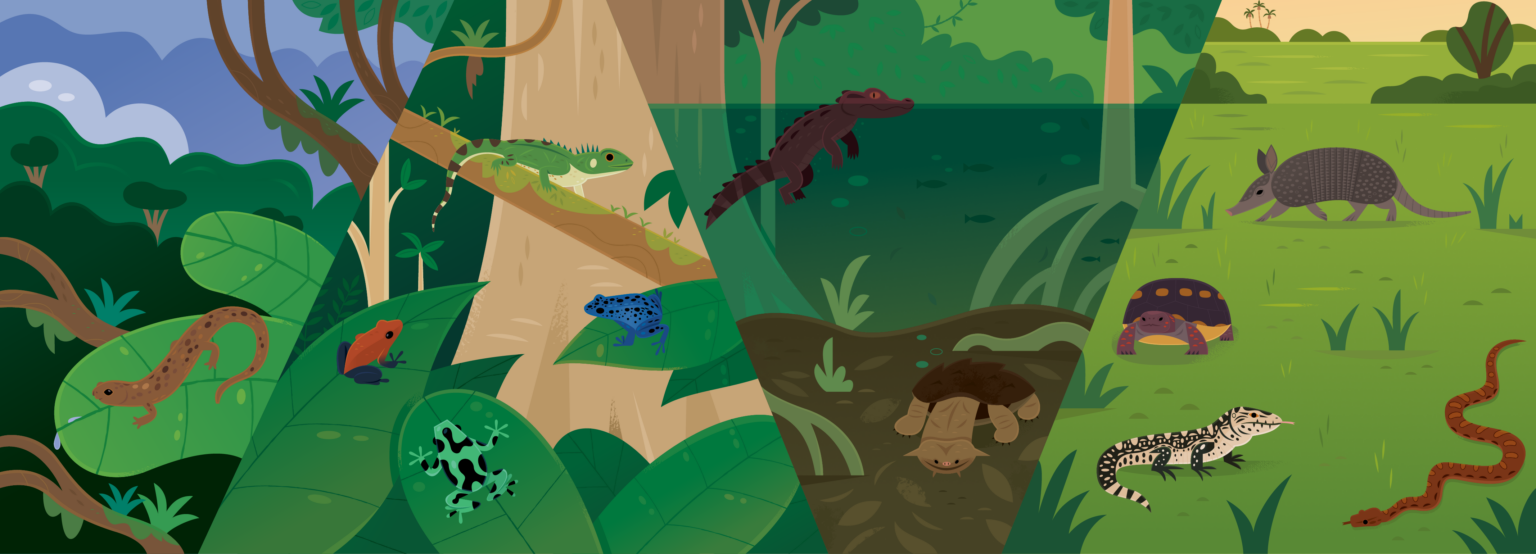
Explore five distinct worlds—dense rainforests where dart frogs flash neon warnings, flooded forests where caimans glide beneath the trees, rivers alive with piranhas and electric eels, open savannas shaped by fire, and misty cloud forests clinging to the Andes.
Thirteen enclosures. Dozens of species. Every step reveals something unexpected.
Open May 23, 2026 – January 2, 2028 | Included with general admission
13 enclosures
5 ecoregions
1 unforgettable journey
Imagine stepping into a world where neon-blue frogs cling to dripping leaves, piranhas swirl in dark water, and the air smells like rain-soaked earth. For the first time at Oregon Coast Aquarium, you can.
Explore five distinct worlds—dense rainforests where dart frogs flash neon warnings, flooded forests where caimans glide beneath the trees, rivers alive with piranhas and electric eels, open savannas shaped by fire, and misty cloud forests clinging to the Andes.
Thirteen tanks. Dozens of species. Every step reveals something unexpected.
Open May 23, 2026 – January 2, 2028 | Included with general admission
13 tanks
5 ecoregions
1 unforgettable journey
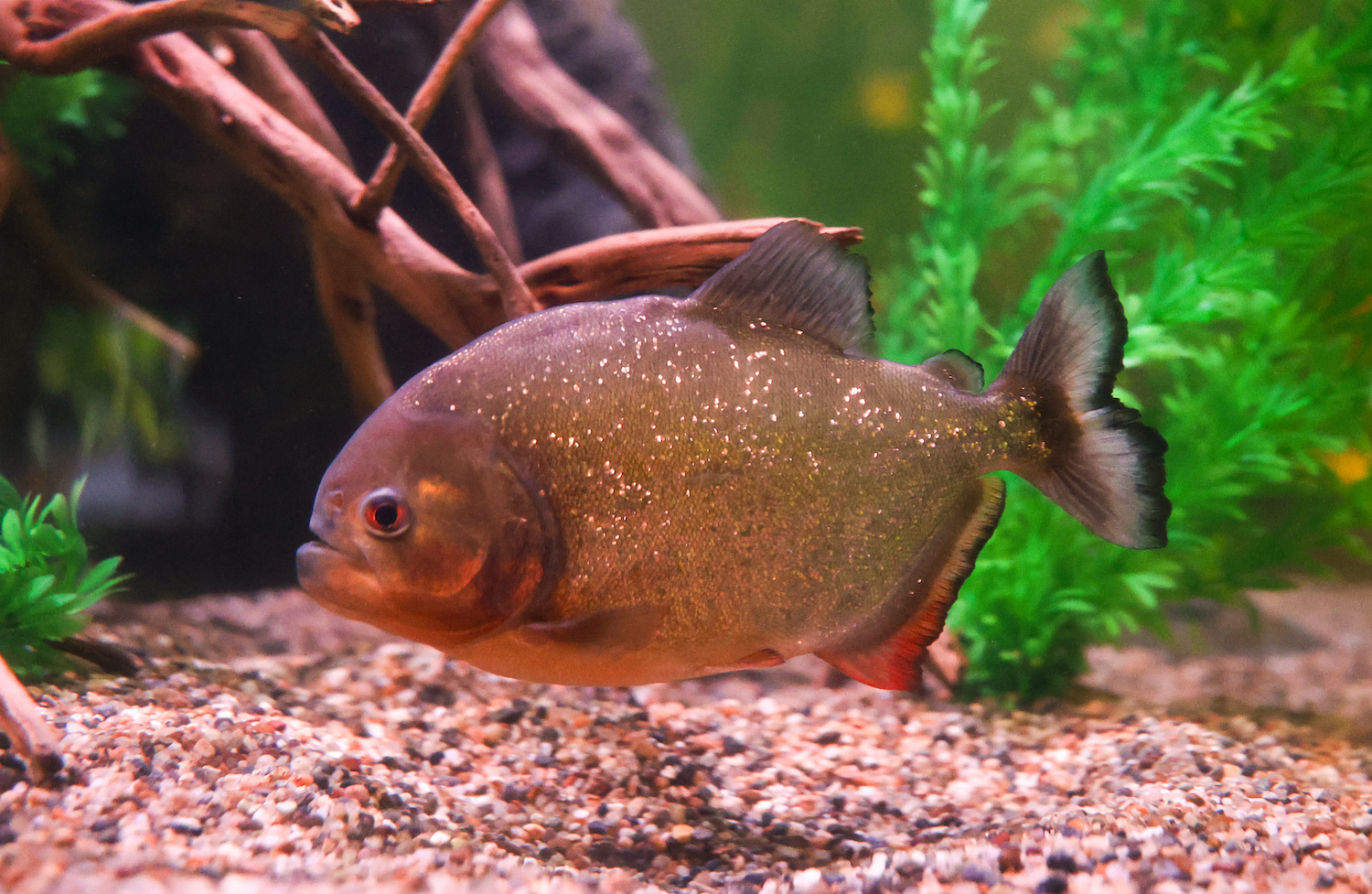
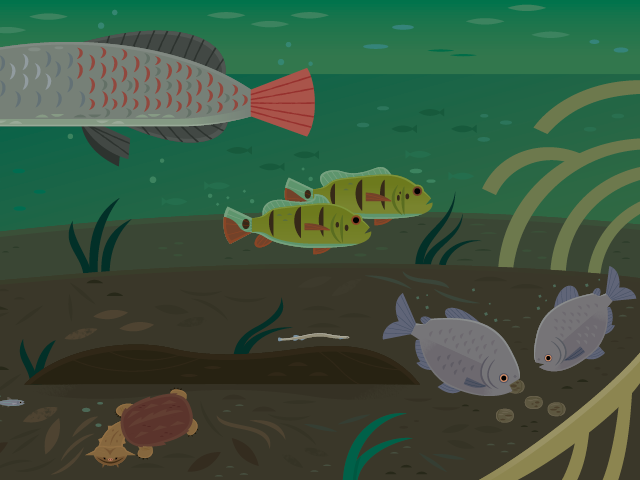
Red-bellied piranha
Pygocentrus nattereri
Fearsome reputation, gentle reality. Piranhas mostly scavenge—they rarely attack anything larger than themselves.
Rivers
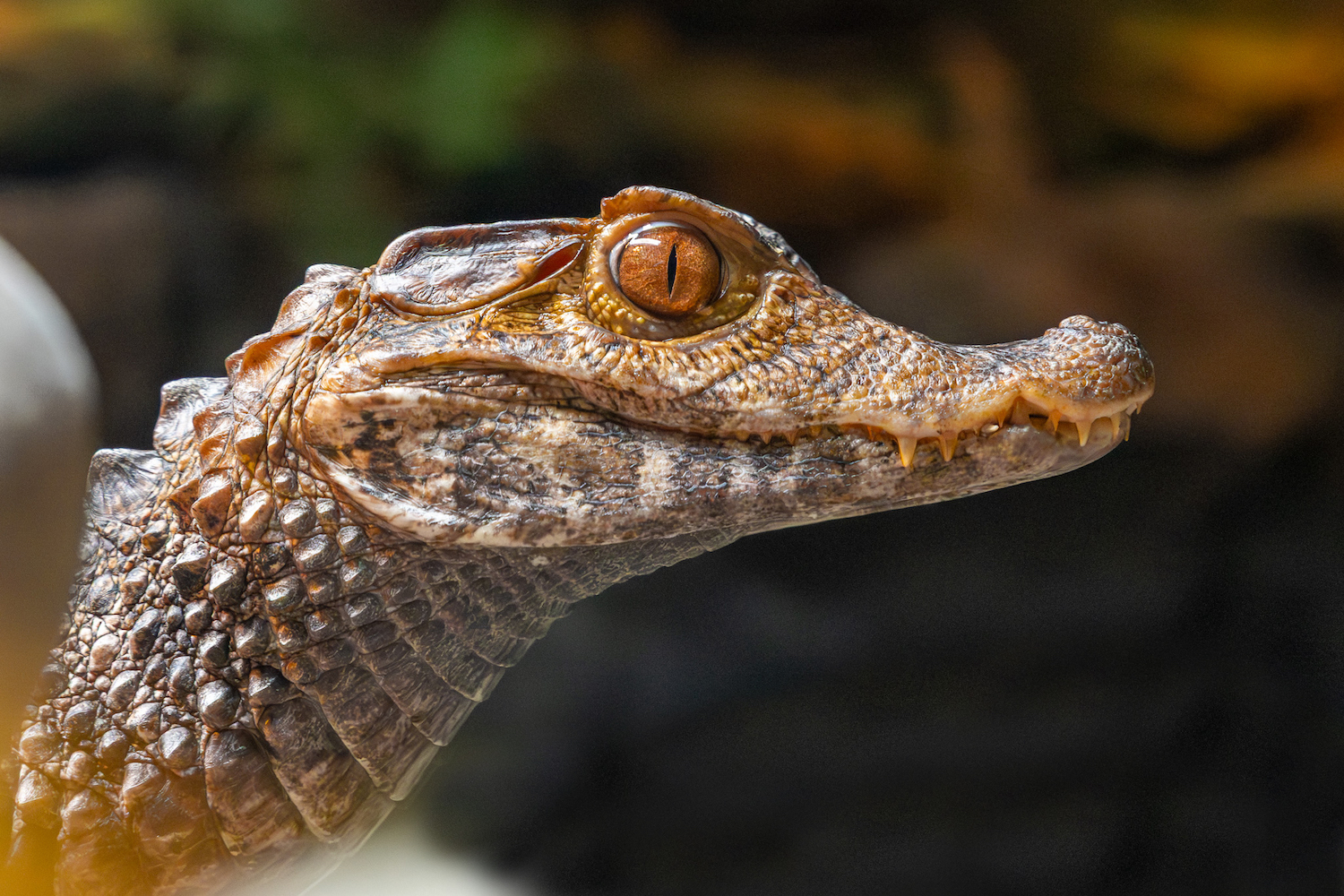
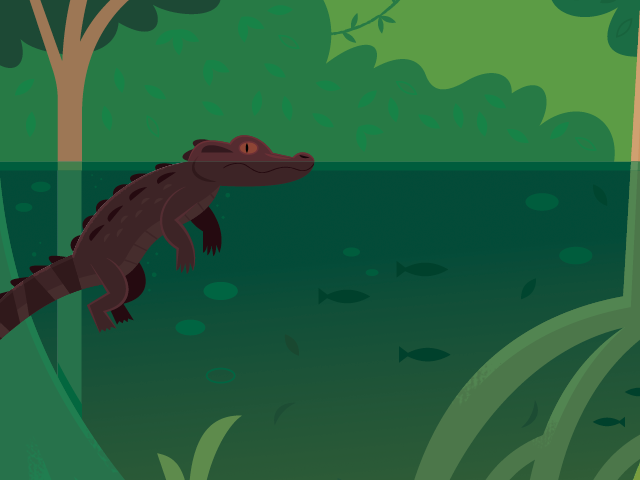
Cuvier’s dwarf caiman
Paleosuchus palpebrosus
Most of the time, all you’ll see of this tiny reptile are its chocolate-brown eyes, little nostrils, and knobby scales peeking above the water. Disguised like a sunken log, it waits—perfectly still—for an unlucky snack to wander by.
Flooded Forest & Rivers
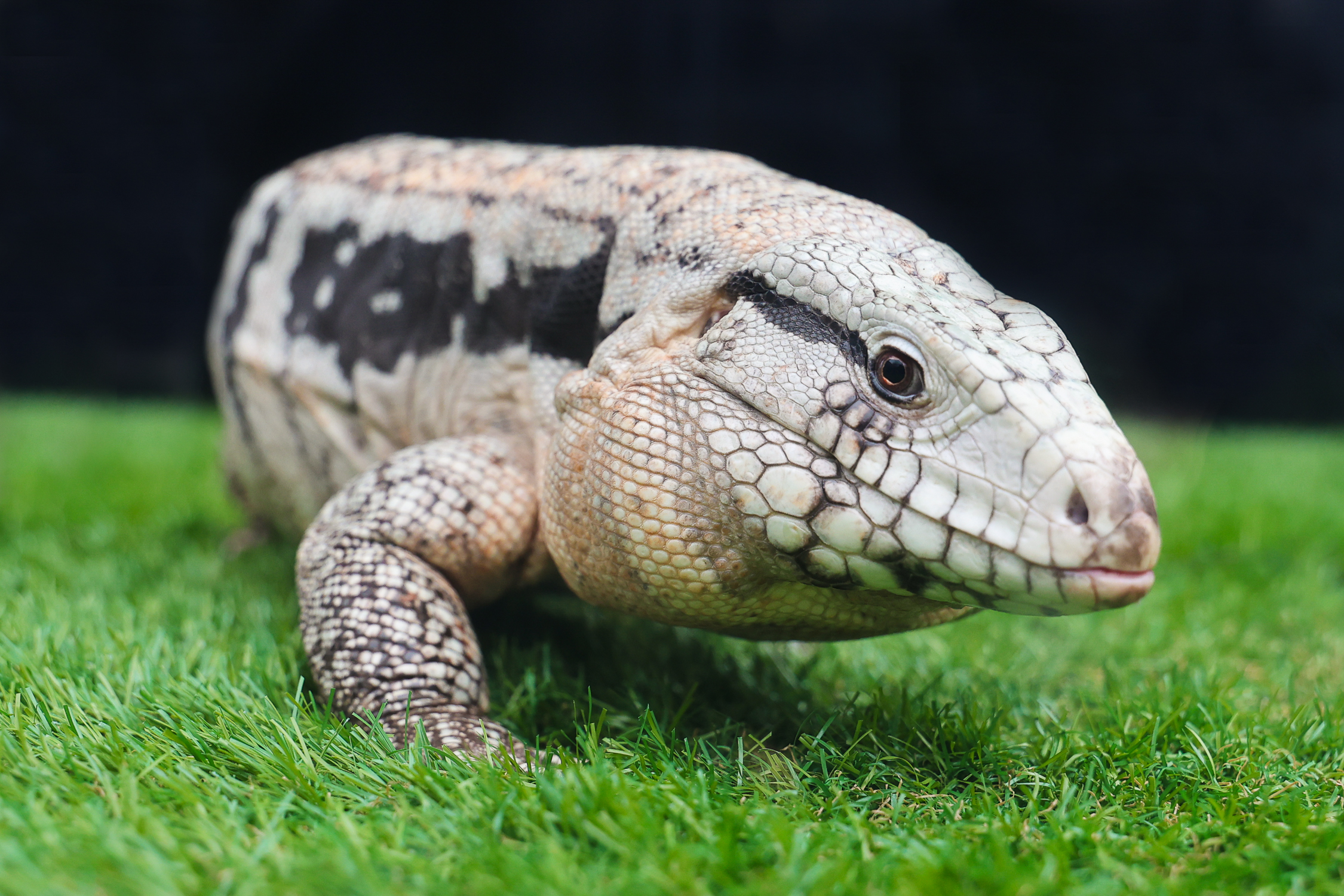
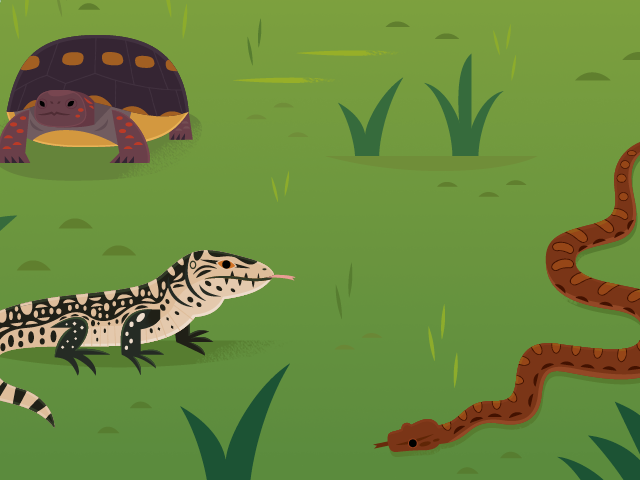
Argentine black & white tegu
Salvator merianae
One of South America’s largest lizards—and one of the smartest. Known for dog-like intelligence and curiosity.
Savanna
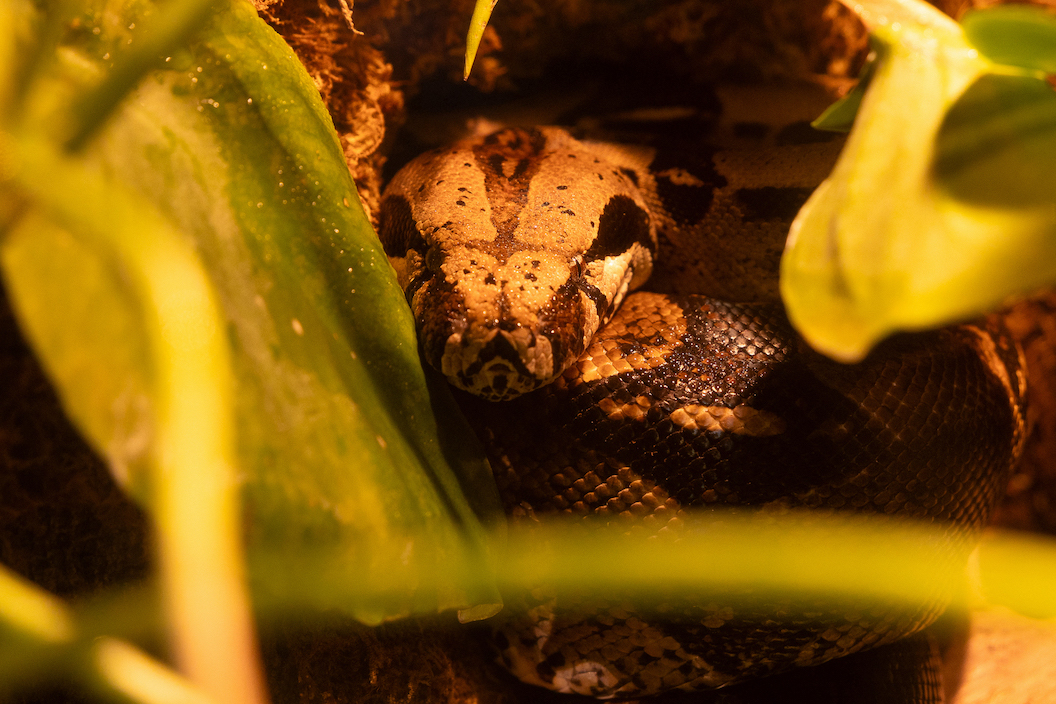
Rainbow boa
Epicrates cenchria
In the light, iridescent scales shimmer with every color. Once hunted for the pet trade, most are now bred in captivity.
Terra Firma Rainforest & Savanna
Giant ameiva
Ameiva ameiva
Lightning-fast. When startled, it darts across the ground using its whip-like tail for balance.
Savanna
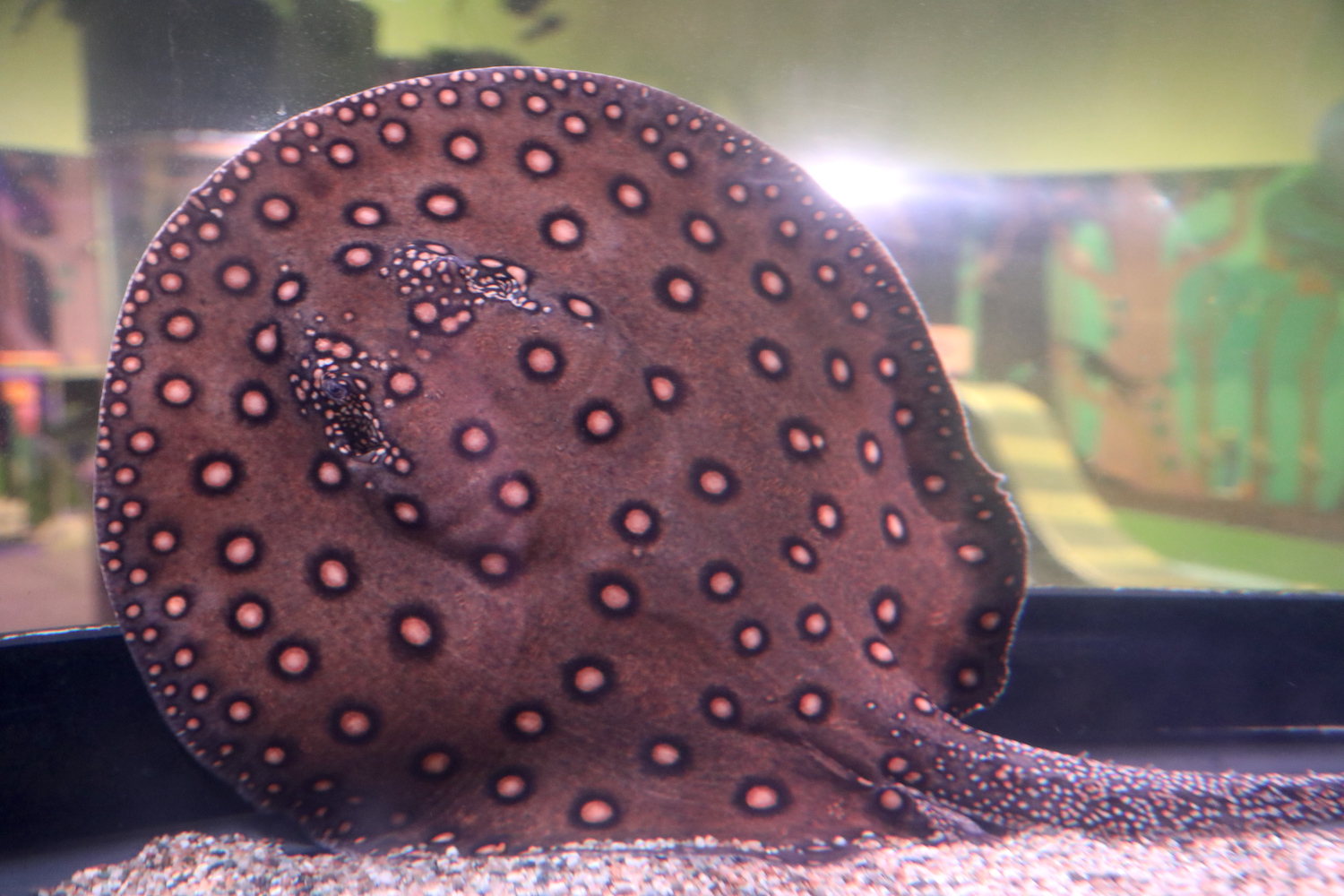
Freshwater orange rays
Potamotrygon motoro
One of the only rays on Earth that live in fresh water. Bright orange spots make them unmistakable.
Rivers
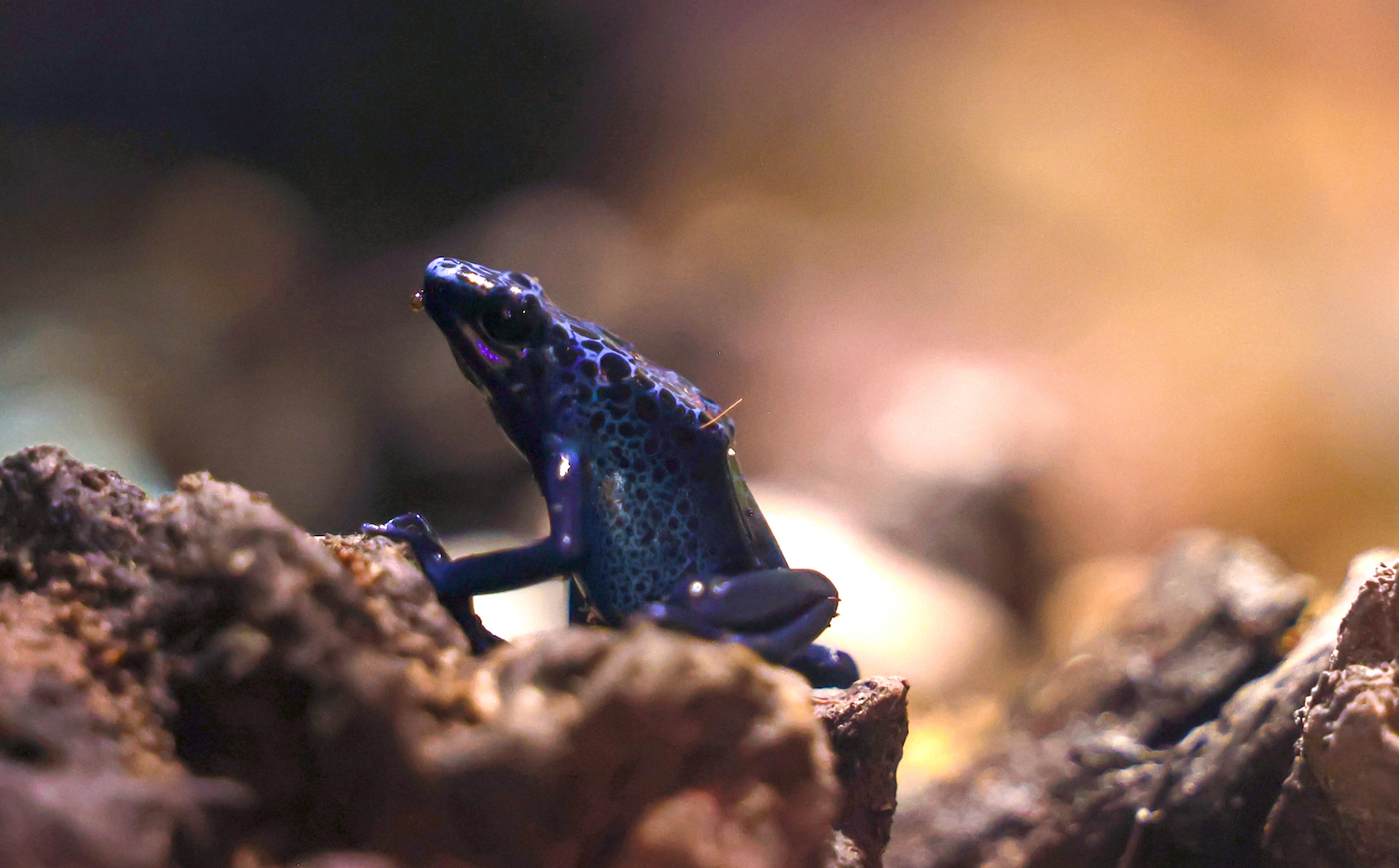
Blue Azureus dart frog
Dendrobates tinctorius azureus
That electric blue is a warning: don’t eat me. The bolder the color, the stronger the toxin.
Terra Firma Rainforest
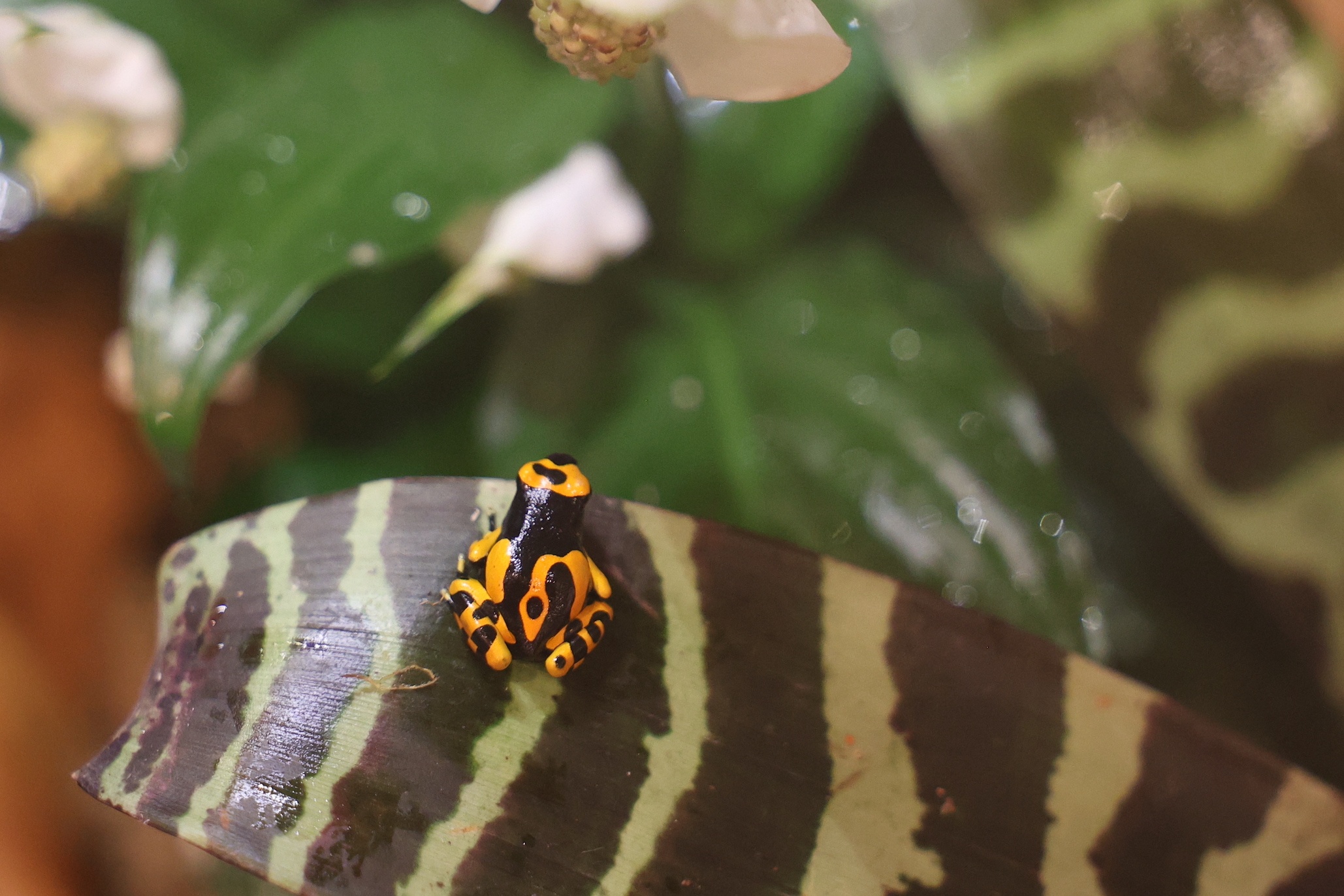
Matecho dart frog
Dendrobates tinctorius
In the wild, their poison comes from insects they eat. Captive-bred? Perfectly safe. Still stunning.
Terra Firma Rainforest
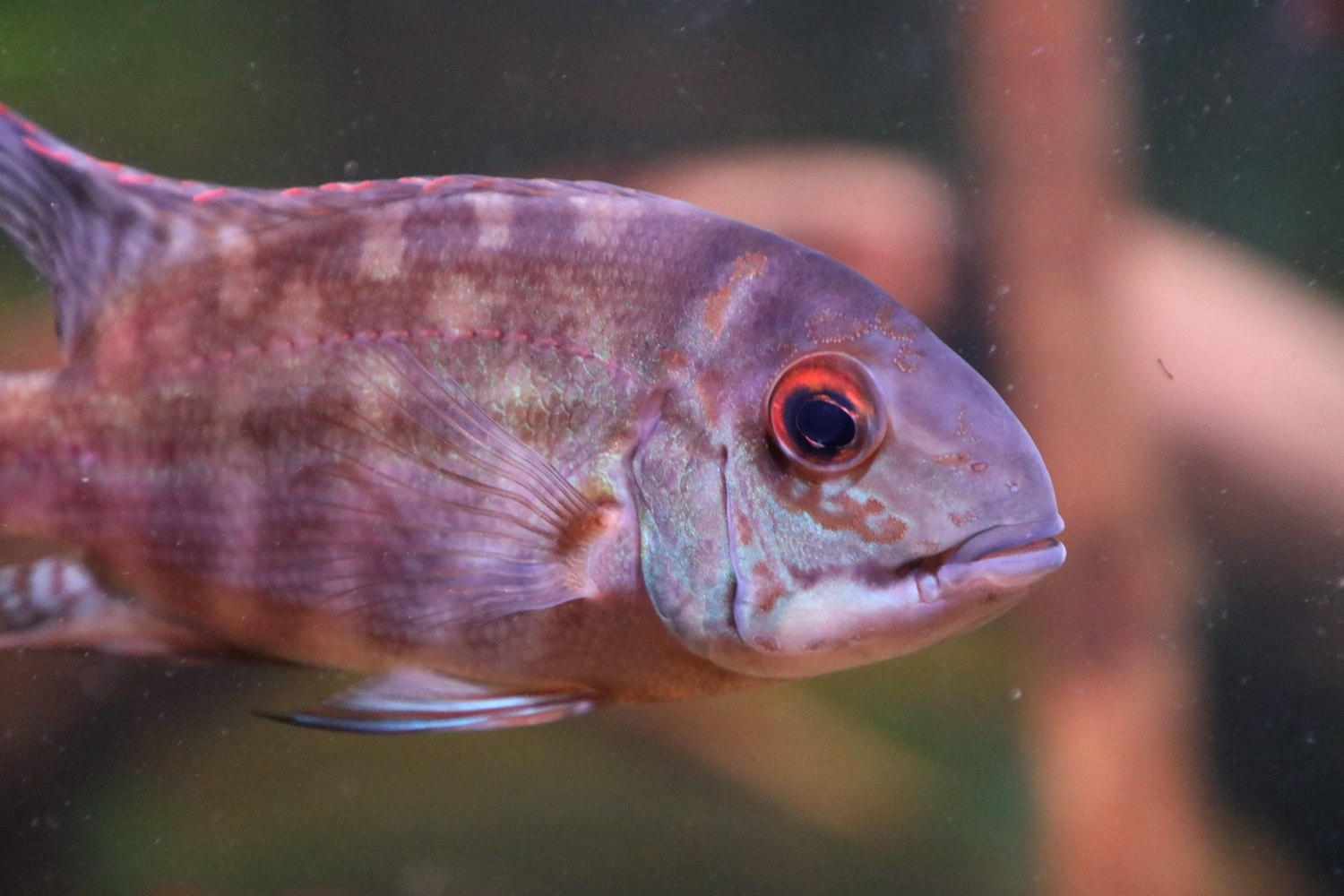
Parrot cichlid
Hoplarchus psittacus
Named for that parrot-like face. Both parents guard the eggs—devoted mom and dad.
Rivers
Mata mata turtle
Chelus fimbriata
The weirdest turtle you’ll ever see. Opens its mouth so fast that prey gets vacuumed right in.
Rivers & Flooded Forests
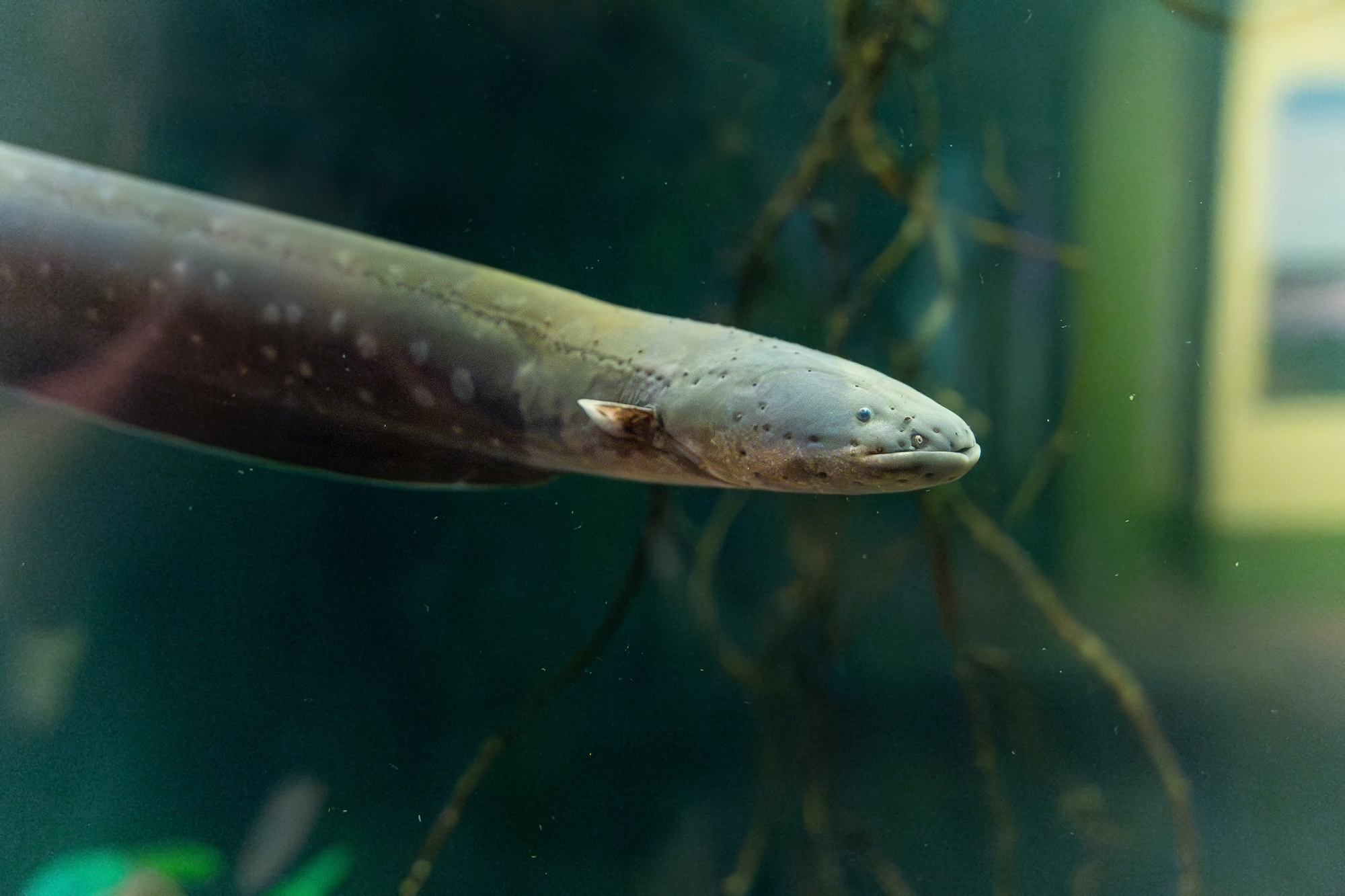
Electric eel
Electrophorus electricus
Up to 860 volts. Enough to stun prey, deter predators, and power a lightbulb. Literally shocking.
Rivers
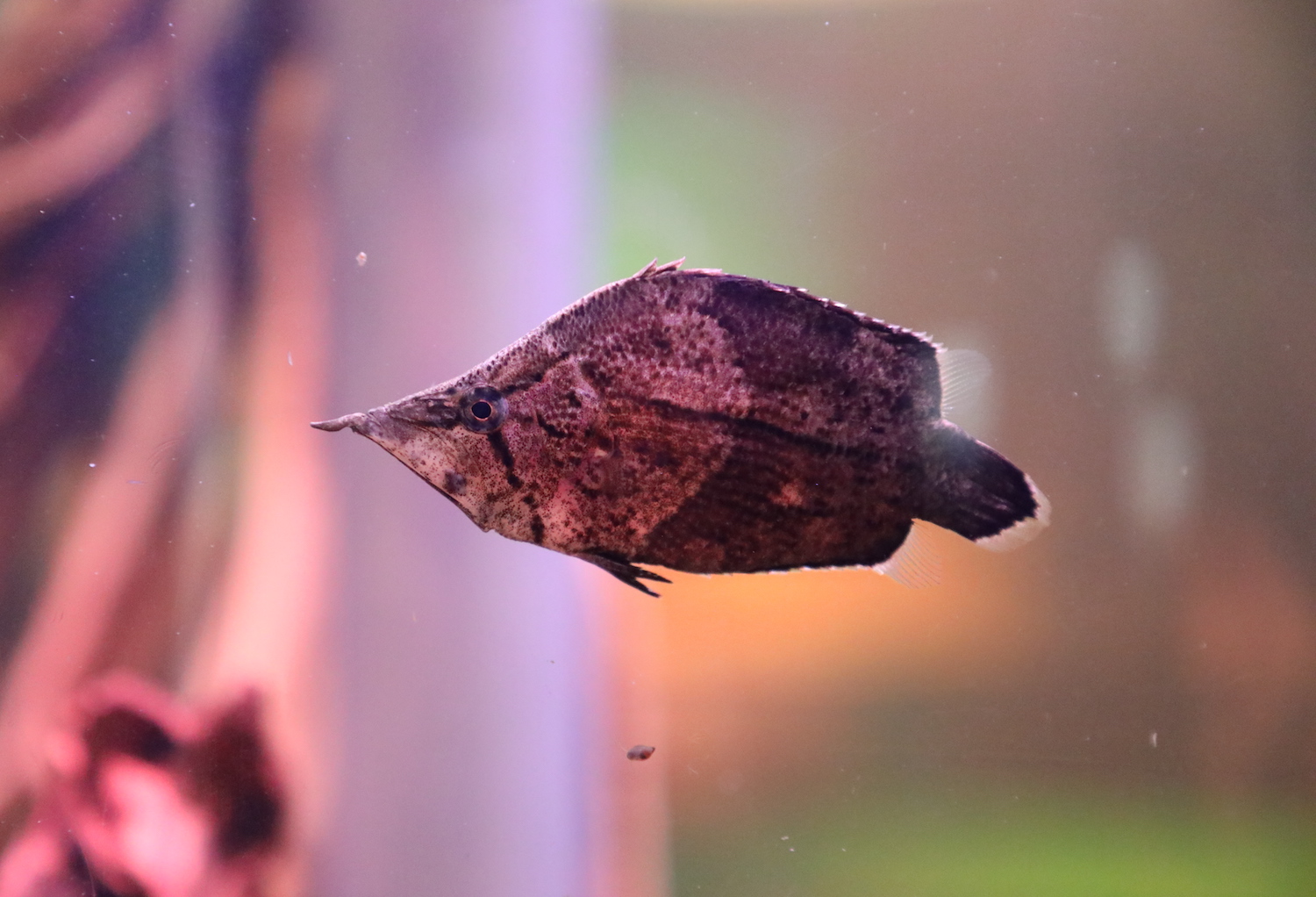
South american leaffish
Monocirrhus polyacanthus
Master of disguise. Its flat, leaf-shaped body vanishes among fallen leaves on the river bottom.
Rivers
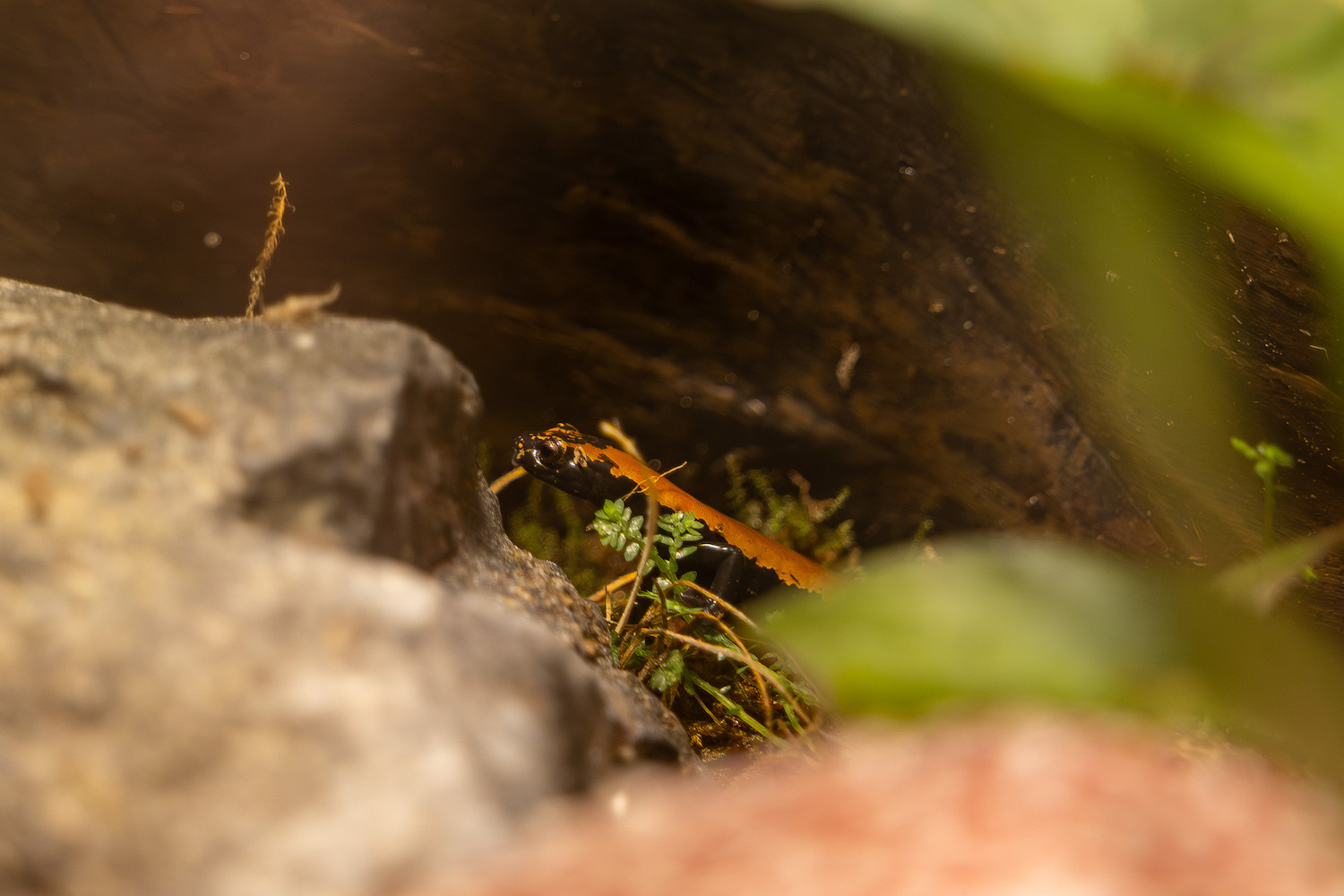
Broad-footed salamander
Bolitoglossa platydactyla
No lungs. Breathes entirely through its skin. Sticky wide feet let it climb like a tiny acrobat
Cloud Forests
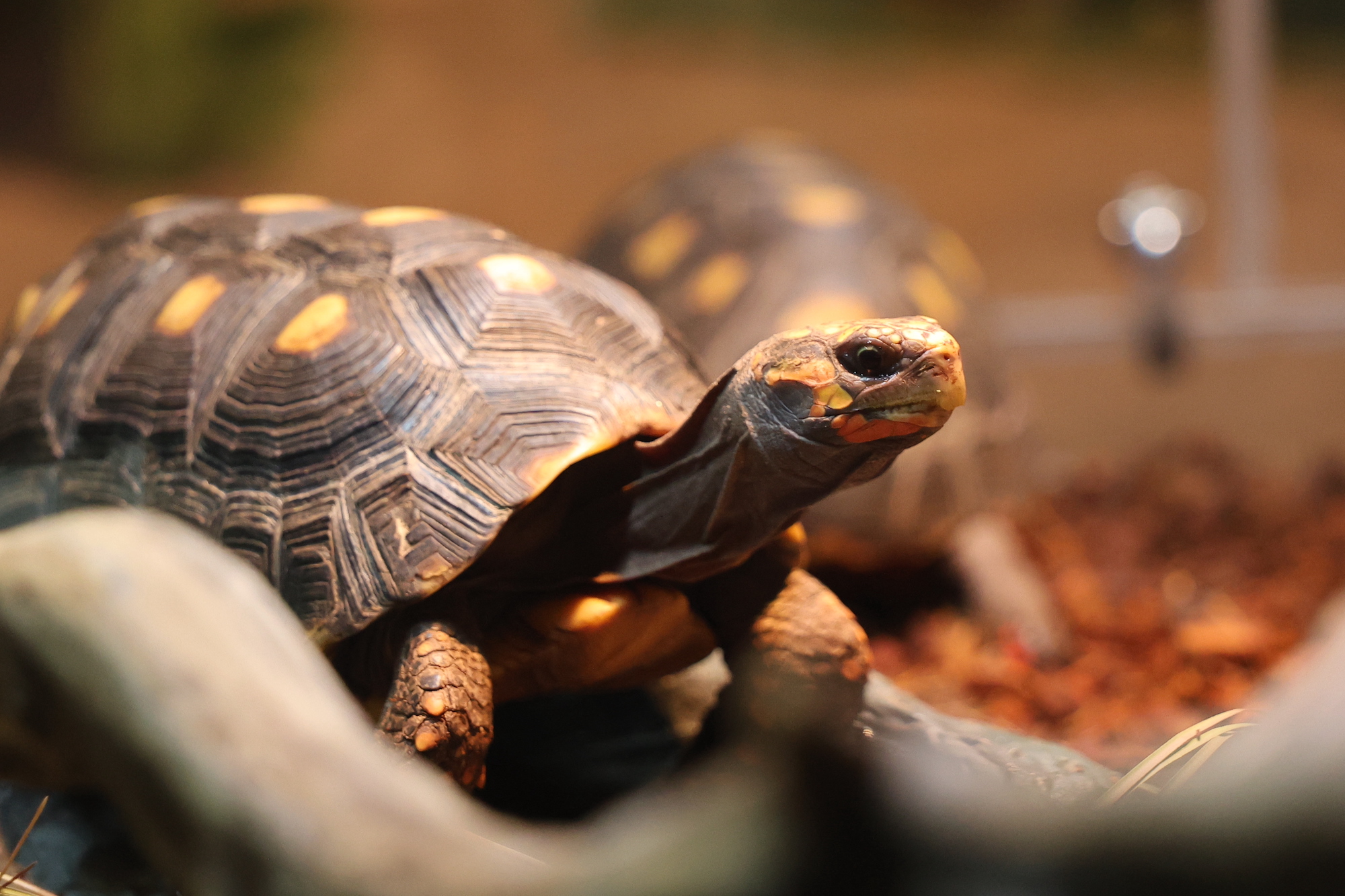
Red-footed tortoise
Chelonoidis carbonarius
Sporting bright red scales on its toes like little bursts of color, the red-footed tortoise ambles along at its own unhurried pace. It’s a quiet forest wanderer, happily snacking and exploring one slow, steady step at a time.
Savanna
Cardinal tetra
Paracheirodon axelrodi
Neon blue and glowing red, these tiny fish flash like living jewels. In the wild they school by the thousands, moving in perfect sync like a current of light.
Rivers
Terra Firma Rainforest
Towering trees block out the sun. Monkeys swing through the canopy, dart frogs flash neon warnings from the understory, and every surface hums with life. Four distinct layers—floor to emergent crown—each with its own cast of characters. Unlike their flooded counterparts, these forests stay dry year-round.
IN THIS ZONE:
Dart frogs · Rainbow boa · Giant ameiva
River & River Banks
The Amazon carries two-thirds of the world’s freshwater through over 1,000 tributaries. This is the exhibit’s species-richest zone—piranhas, electric eels, rays, and the unique mata mata turtle.
IN THIS ZONE:
Piranha · Electric eel · Mata mata · Orange rays · Leaffish · Cichlids · Silver dollars · Cardinal tetra
Savanna
Open grasslands under vast sky. Fire-adapted grasses sway in the wind. It looks nothing like the jungle—and that’s exactly the point. The Amazon is more than just a rainforest.
IN THIS ZONE:
Argentine black & white tegu · red-footed tortoise
Flooded Forest
When rains come, rivers swallow the forest whole. Floodwaters stretch 30 miles wide. Small animals climb to the treetops and wait. Caimans glide silently below.
IN THIS ZONE:
Cuvier’s dwarf caiman
Cloud Forests
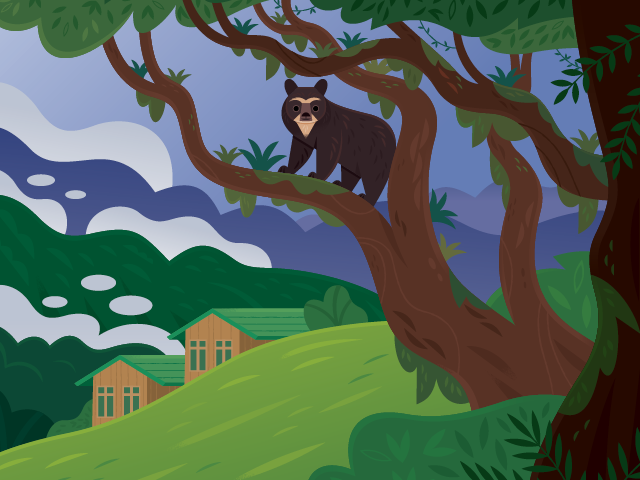
Mist clings to every mossy branch. Orchids and ferns drip with condensation. High in the Andes, this cool, quiet world shelters species found nowhere else on Earth.
IN THIS ZONE:
Broad-footed salamander
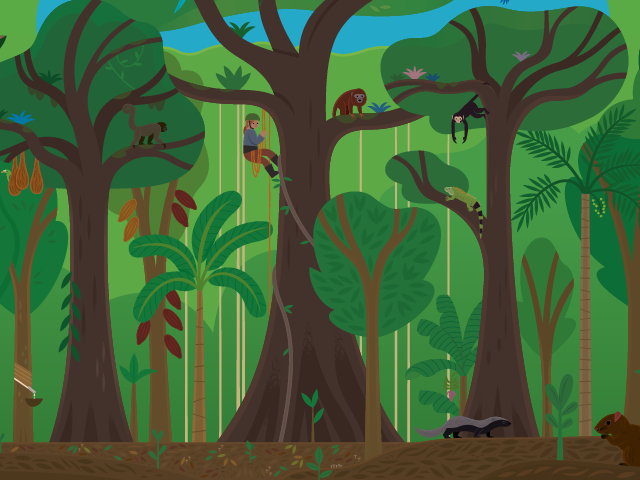
All artwork featured in this exhibition—ranging from expansive murals to finely rendered spot illustrations—was created by artist Alexander Vidal. They’re not decoration, they’re immersion.
To explore more of his work, visit his portfolio at alexandervidal.com
The Amazon isn’t a distant, isolated place. It’s an active part of the same Earth system that shapes the weather and climate here in Oregon. By moving vast amounts of moisture through the atmosphere, it helps drive global rainfall patterns, influences temperatures far beyond South America, and supports ecosystems that affect the stability of the planet we all depend on.
Every year, an area of rainforest twice the size of Los Angeles is destroyed by mining, burning, and cattle ranching. At this rate, the Amazon could be gone by 2060.
Parrots, primates, reptiles, and a host of other Amazonian creatures are often captured from the wild and sold as pets. When babies are taken, adults are often killed protecting them. Only 1 in 4 survives the trip.
The Amazon basin gives us many things we use every day. Plants like cacao become chocolate, coffee plants grow the beans for your morning drink, and rubber trees provide the sap used to make tires and other materials. The forest is also a source of fruits, fibers, and medicines. In fact, the Amazon plays a huge role in Western medicine—about 25% of commonly used drugs come from its plants.
Millions of people call the Amazon home. Their lives are shaped by the same forests, rivers, and seasons you’ll explore in this exhibit.
100 feet up, clipped to a rope, a biologist bolts a camera to a branch.
That’s how you study animals most people never see.
The river rises. The house stays dry.
Families live in palafitas—palafitas, wooden stilt houses built high above the flood line, are a traditional Brazilian house. Farming and fishing shift with the seasons, a rhythm passed down for generations.
Dugout canoe. Balsa raft. Industrial barge.
The river is how people and goods move through the basin. It’s been the region’s highway for centuries.
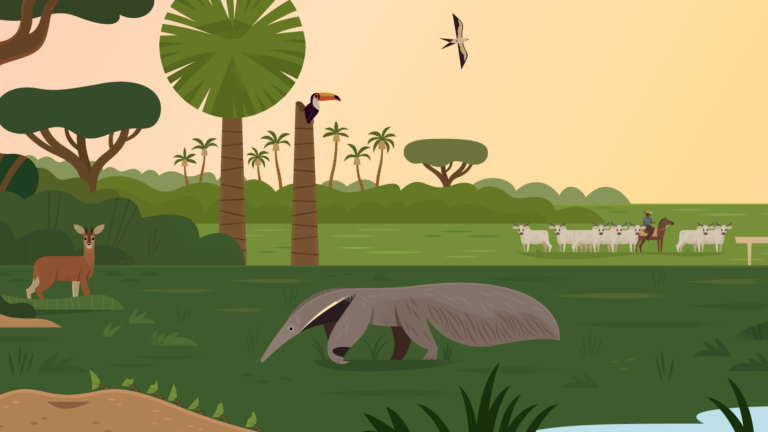
The forest is shrinking. The grassland is growing.
Scientists race to understand savannization—and figure out how to slow it down. While savanna ecosystems are a natural component of the Amazon Basin, they are now expanding beyond their typical bounds, increasingly encroaching upon and displacing areas of forest.
One research station. The only one of its kind in Peru.
Climate scientists study how rising temperatures threaten these fragile, mist-wrapped ecosystems.
100 feet up, clipped to a rope, a biologist bolts a camera to a branch.
That’s how you study animals most people never see. At night, far from any city lights, the Amazon offers some of the clearest skies on Earth.
The river rises. The house stays dry.
Families live in palafitas—wooden stilt houses built high above the floodline. Farming and fishing shift with the seasons, a rhythm passed down for generations.
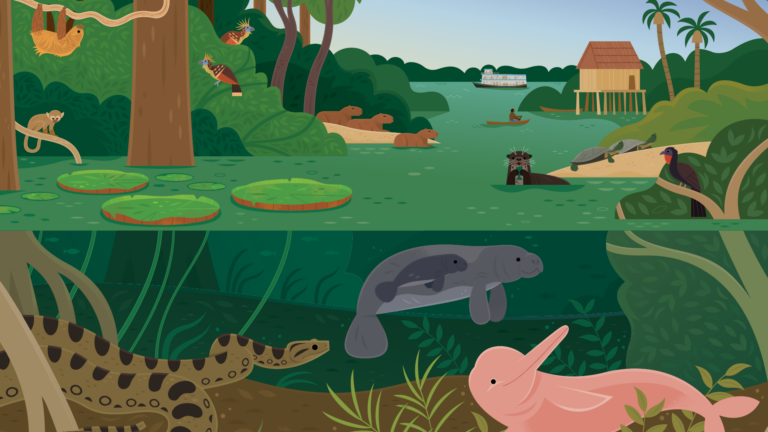
Dugout canoe. Balsa raft. Industrial barge.
The river is how people and goods move through the basin. It’s been the region’s highway for centuries.
The forest is shrinking. The grassland is growing.
Scientists race to understand savannization—and figure out how to slow it down.
One research station. The only one of its kind in Peru.
Climate scientists study how rising temperatures threaten these fragile, mist-wrapped ecosystems.

Everything you need to plan your visit—fast.
A membership pays for itself in two visits. Unlimited admission, gift shop discounts, and exclusive member events.
Thirteen enclosures, five ecoregions, piranhas, poison dart frogs, an electric eel, hands-on interactives, and original murals by Alexandar Vidal—all included with general admission. Visitors typically spend 30–45 minutes. It’s the largest new exhibit OCAq has opened in years.
May 23, 2026. It runs through January 2, 2028.
Thirteen tanks feature piranhas, a dwarf caiman, tegu, rainbow boa, poison dart frogs, freshwater rays, leaffish, cichlids, mata mata turtle, electric eel, giant ameiva, red-footed tortoise, and a broad-footed salamander.
Yes, entry to the Amazon Basin exhibit is included with admission the Aquarium. No separate ticket required.
30–45 minutes for the full exhibit, including interactive elements.
Inside the main building in our changing exhibit space. You can chart your path via our interactive map.
Five: Terra Firme Rainforest, Flooded Forest, River, Savanna, and Cloud Forest.
Yes. Fully accessible throughout. Strollers welcome too.
Groups of 15+ get special admission rates to the Aquarium. Visit our group tickets page for more information.
January 2, 2028. Don’t wait.
The Amazon Basin is home to one of the most vital ecosystems on the planet, yet it faces significant and growing threats. Vast areas are still being cleared for logging, agriculture, and cattle ranching, destroying the habitats of countless plants and animals. Mining further degrades the landscape and pollutes rivers that both people and wildlife depend on. Each year, many animals are taken from the wild to supply the exotic pet trade. At the same time, climate change is making parts of the forest hotter and drier, making it increasingly difficult for many species to survive.
The Amazon’s extraordinary biodiversity is essential to the health of our planet. Protecting it means preserving clean water, maintaining climate stability, and safeguarding millions of species found nowhere else on Earth.
Not the live ones. But throughout the exhibit, you’ll find interactive touch stations featuring biofacts—both authentic and carefully recreated—that invite a hands-on experience.
Yes. Amazon-themed souvenirs will be available.
This exhibit was designed for ages 5–11. Experience a smell wall, sound matching, touch boxes, and a crawl-in log.
This exhibit was brought to you in part by donations from the Economic Development Alliance of Lincoln County, and by donors like you.
Since opening in 1992, the Oregon Coast Aquarium has been a premier attraction on Oregon’s central coast and an enduring advocate for the health of our ocean. For over three decades this 501(c)3 non-profit organization has supported marine wildlife and fostered environmental stewardship through its education programs, community partnerships, and rehabilitation efforts. Accredited by the Association of Zoos & Aquariums, the Oregon Coast Aquarium is consistently ranked as one of the top 10 aquariums in the U.S., providing visitors with opportunities to connect with 15,000 animals spanning 300 different species. The Oregon Coast Aquarium is located at 2820 S.E. Ferry Slip Rd., Newport, OR. Learn more about the Oregon Coast Aquarium and its vital work at aquarium.org, 541-867-3474. Follow us on Facebook or Twitter for the latest updates.
Copyright © 2026 Oregon Coast Aquarium. All rights reserved.