Geriatric care is a little talked about but essential part of care for our pinnipeds. Sea lions and seals enter this period of their lives in their late twenties, and just like humans their geriatric years require special care and evaluation.
Animal welfare is a top priority here at the Oregon Coast Aquarium, but as an animal gets older these needs change. Sea lions will typically begin to show geriatric signs in their early 20’s, while harbor seals start to show around their mid 20’s. Signs usually appear in the form of vision loss due to cataracts, and arthritis, which lead to slower movement or not utilizing a flipper as much as they used to. When these symptoms present themselves, a radiograph is taken and a formal diagnosis can be made.
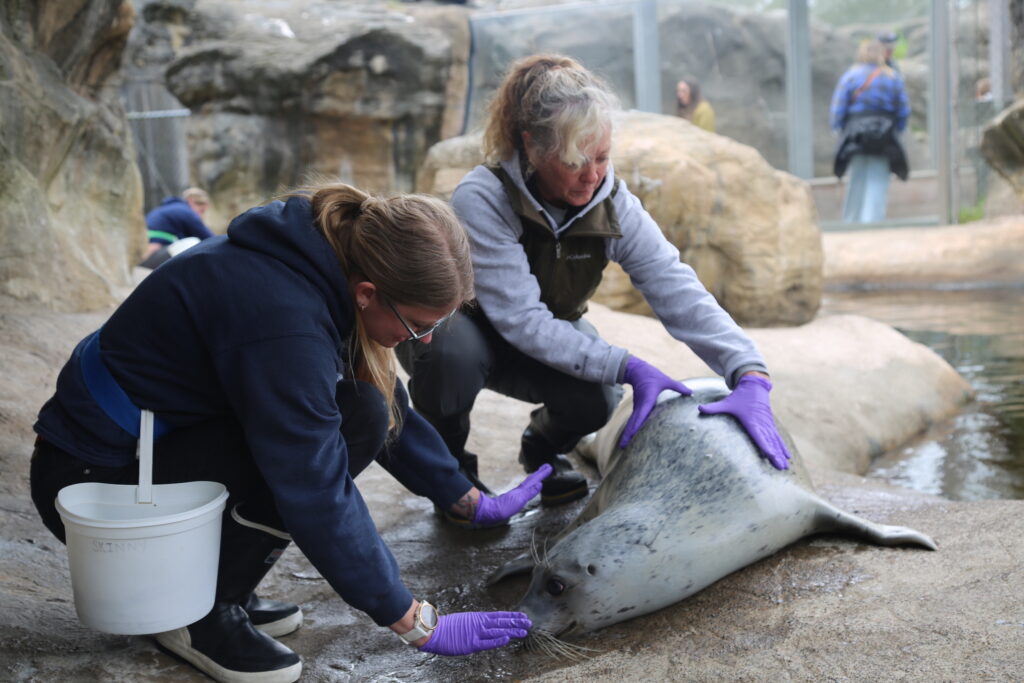
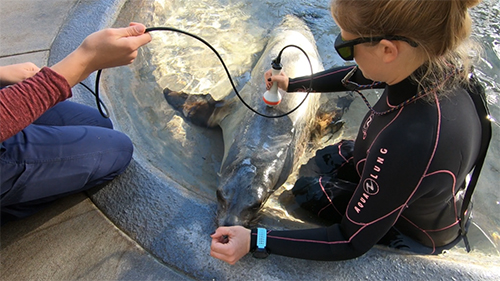
Specific geriatric care for our pinnipeds vary, depending on the individual animal’s needs. Past practices for geriatric care arthritis and cataracts have included treatments like acupuncture, physical therapy, laser therapy, and chiropractic care. Daily physical therapy includes activities like encouraging unusual swim patterns, muscle massages, and rotation of flippers to improve range of motion. Laser therapy primarily requires an animal to be able to lie still for a duration of time while a trained veterinary technician applies treatment. Laser therapy aids in not only arthritic care, but also in the case of injuries. Chiropractic care is delivered by a specialist from Willamette Veterinary Hospital, and is utilized for a variety of our pinnipeds.
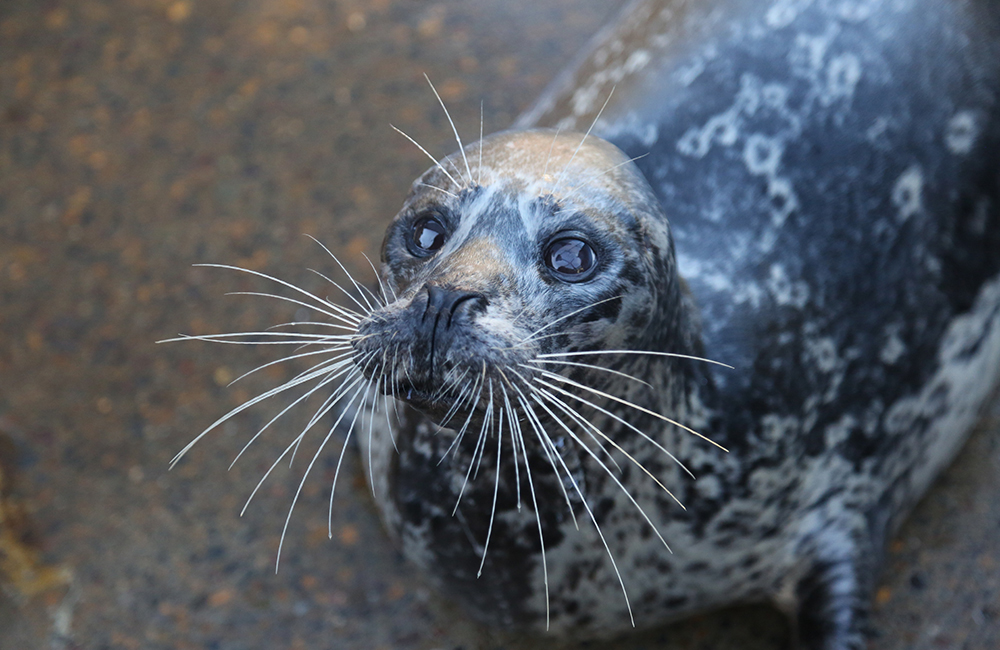
Several of our harbor seals currently are receive geriatric care. Miller, Tazzy, and Elvis all have cataracts and signs of slowing down that is associated with old age. Skinny is the oldest of our harbor seals–born in 1975 and is the oldest recorded harbor seal in the world. She had to have her right eye removed due to a luxated lens in her right eye that was causing increased eye pressure. Removing her eye has increased her quality of life. Skinny still moves around well despite having some arthritis in her front flippers. She gets a monthly visit from her chiropractor and receives cold laser therapy as needed to help increase her mobility.
As part of their general training, all of the pinnipeds are trained to receive check-ups and radiographs from a young age. This means being able to do tasks like lying down on cue, holding specific positions for certain durations of time, or lifting a body part in a certain motion. This can be used for voluntary blood draws, assessing injuries, dentistry, and various medical treatments. Ultimately, the most important aspect is to build and maintain strong relationships between the animals and the husbandry staff. Because the animals feel safe and trust their keepers, the husbandry staff is able to monitor and maintain their wellbeing.
We use cookies to improve your experience and see how our guests are navigating the website. If this is alright by you, hit 'Accept All', or 'Settings' to customize and learn more.
Read our cookie policy