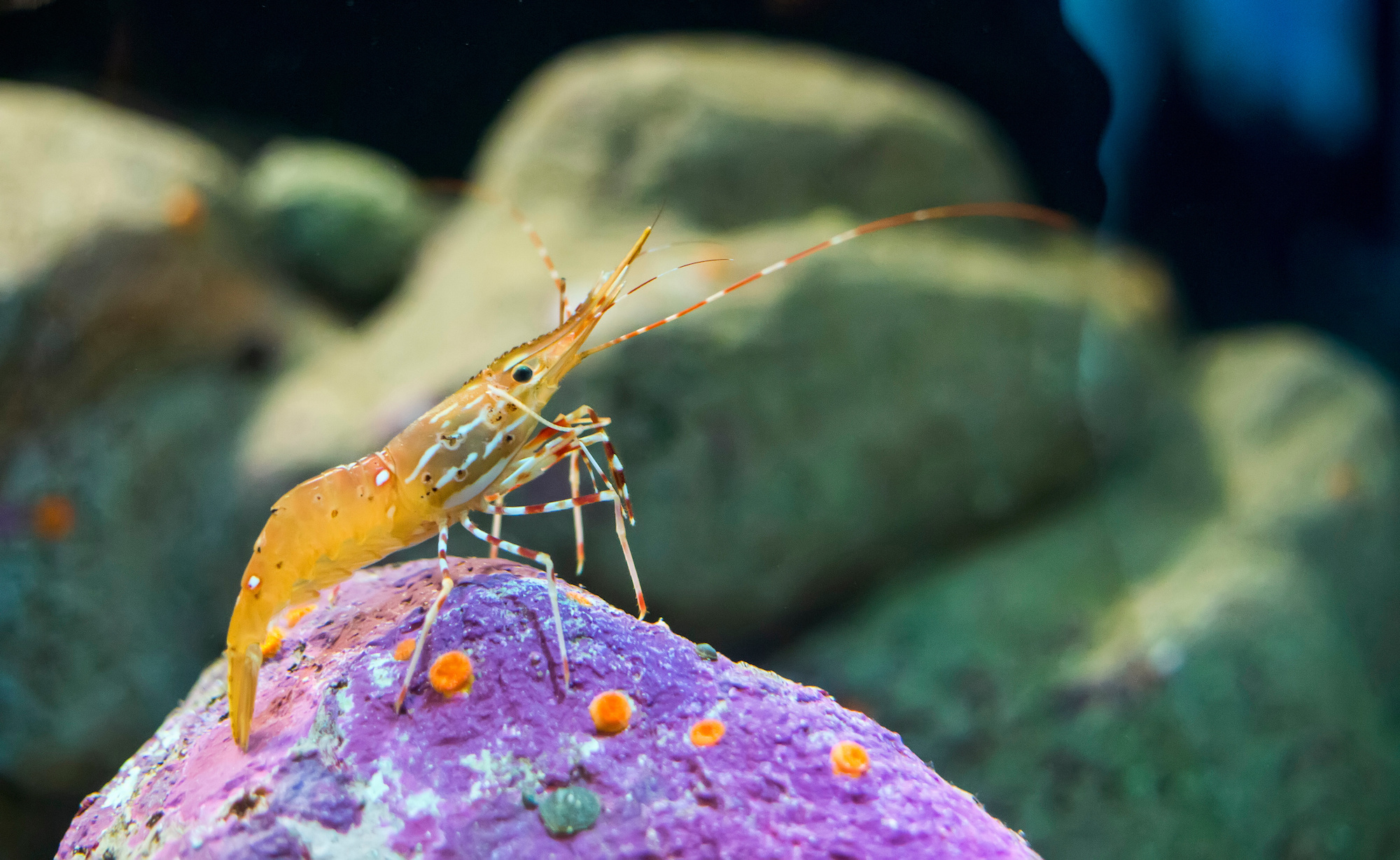
The spot prawn has a red-orange shell with white stripes on its sides and white spots on its first and fifth abdominal segments. Both its 5 pairs of walking legs and its antennae are banded with dark red and white or light red. The first pair of walking legs have claws. The shell is covered in a layer of short and fine setae.
Habitat
Variety of bottoms but rocky habitats from the intertidal zone to depths greater than ~1,312 feet.
Diet
Omnivore: algae, diatoms, worms, mollusks, sponges, other shrimp, and will also scavenge on dead and decaying organisms.
Life History
All individuals hatch from their eggs as male and spend the first 4-5 years of life as male, becoming able to reproduce by their 3rd year, but they may mate as a male once. When they reach about 1.3” in length, they change into a female and will have the opportunity to mate again 1 or 2 times. They breed in October, with the female molting into a special shell for brooding eggs. The female broods the eggs on her swimmerets for 4-5 months, until they hatch in March or April. Upon hatching, an individual becomes plankton and moves through 3-4 larval stages before settling to the bottom, around May or June.
Can reach lengths of 12” and live at least 11 years.
IUCN Status
Not Evaluated
Ecosystem & Cultural Importance
Spot prawns feeds its predators including the Giant Pacific Octopus, yelloweye rockfish, halibut, Pacific cod, walleye pollock, flounder, and salmon.
Spot prawns support commercial fisheries from Alaska to northern California.
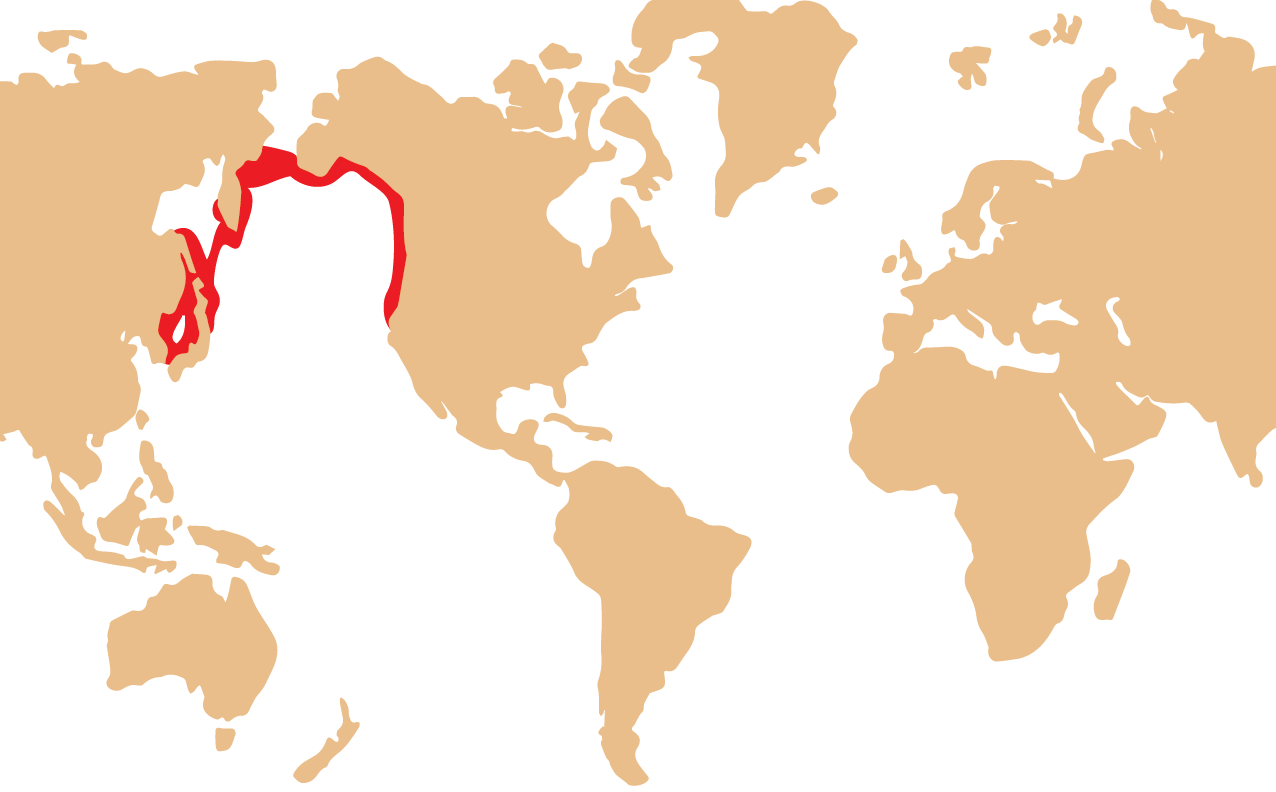
North Pacific: in the Eastern Pacific it stretches from San Diego, California to Unalaska Island, Alaska. In the Western Pacific from the Sea of Japan to the Korean Strait
We use cookies to improve your experience and see how our guests are navigating the website. If this is alright by you, hit 'Accept All', or 'Settings' to customize and learn more.
Read our cookie policy