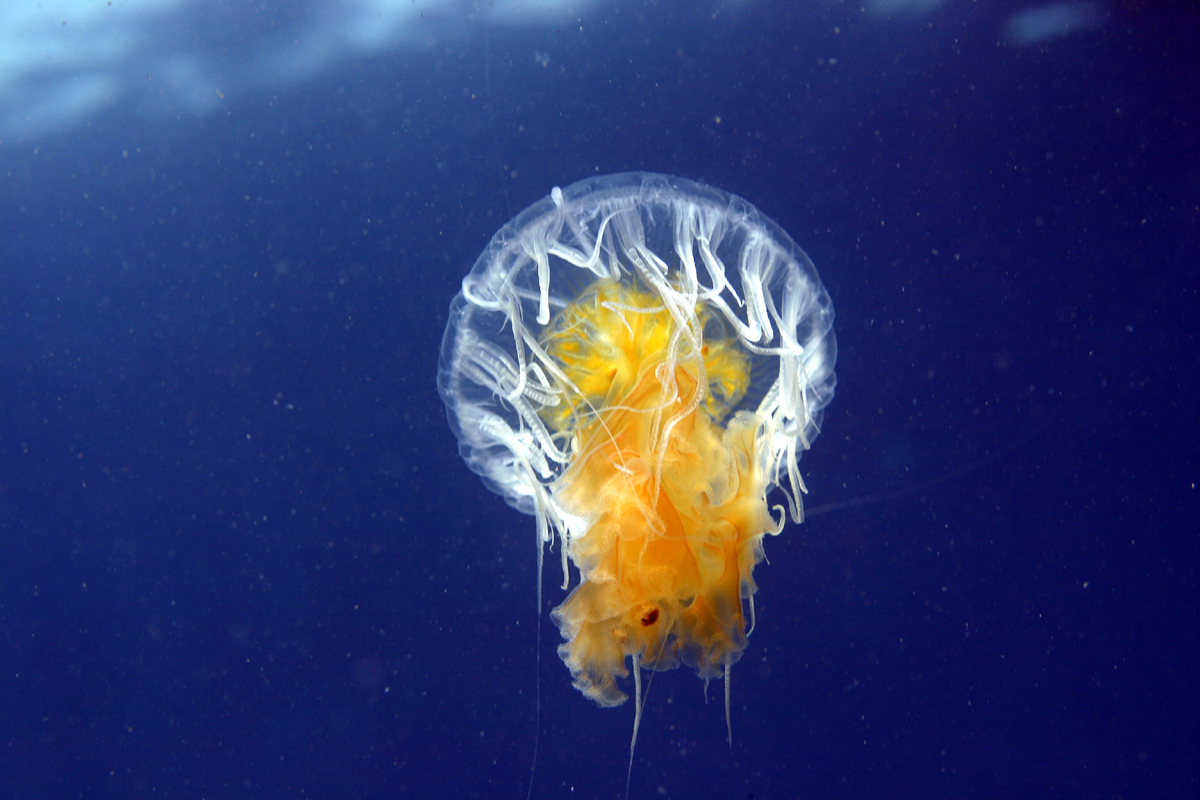
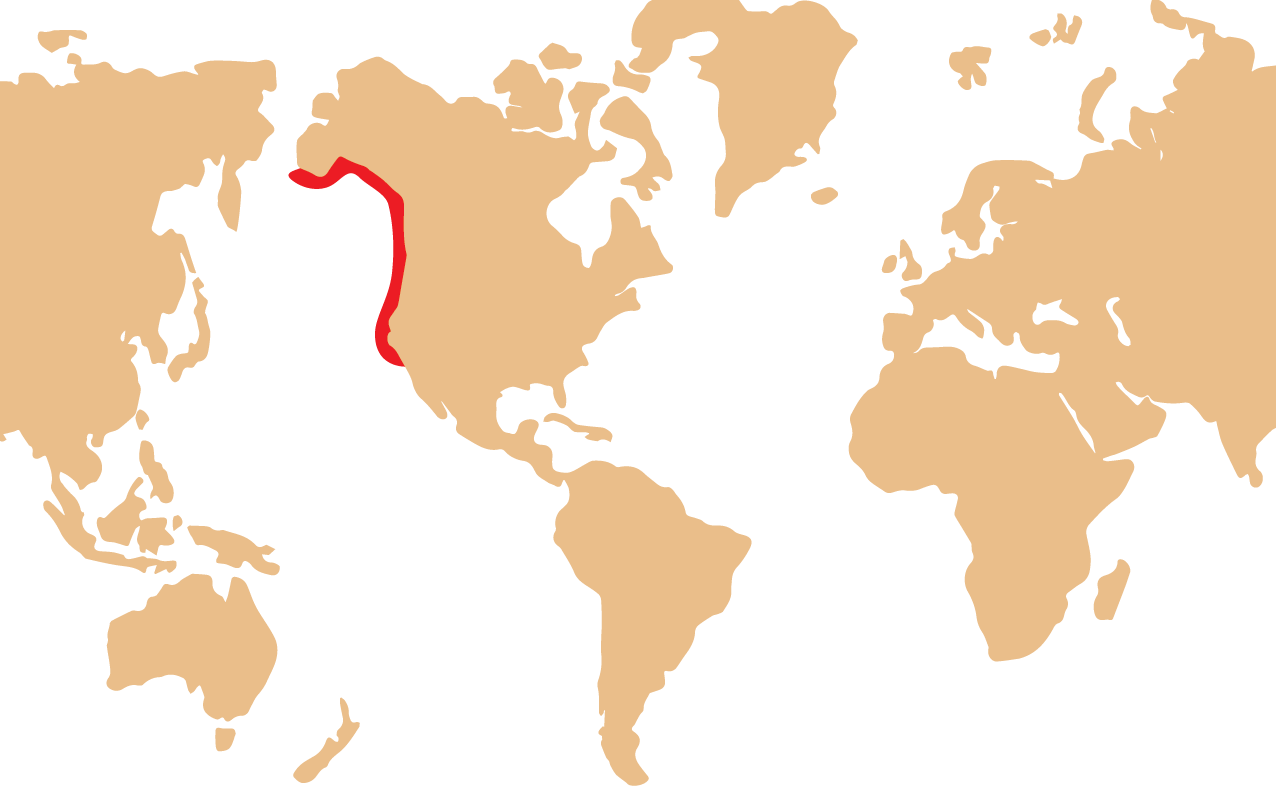
A transparent white body with a yellow center gives the egg-yolk jelly an appearance similar to a fried egg. Its large circular body, known as a bell, stretches out to one to two feet wide. The center is colored yellow due to the jelly’s reproductive organs.
Habitat
Open waters
Diet
Fish eggs and larvae including those of Pacific herring, other jellies
Life History
The eggs of the egg-yolk jelly are released into the ocean waters. After hatching, the baby jellies settle to the seafloor and become small polyps. When the water is perfect, each polyp will release small baby jellies into the ocean. After around nine months the small jellies grow into mini adults. Over time the mini adults grow into the full one to two foot wide adult jelly.
IUCN Status
Not Evaluated
Ecosystem & Cultural Importance
These large jellies create a symbiotic relationship with amphipods and young crabs. The amphipods and crabs live around and in the jelly thus receiving a safe place to call home in the vast ocean. The egg-yolk jelly feeds on the waste and shedded exoskeletons of its tenants.
Despite their name, the egg-yolk jelly does not taste like eggs.
Citations & Other Resources
Dunne, J. A., H. Maschner, M. W. Betts, N. Huntly, R. Russel, R. J. Williams, S. A. Wood. 2016. The roles and impacts of human hunter-gatherers in North Pacific marine food webs. Scientific Reports 6 (21179).
Towanda, T., E. V. Thuesen. 2006. Ectosymbiotic behavior of Cancer gracilis and its trophic relationships with its host Phacellophora camtschatica and the parasitoid Hyperia medusarum. Mar Ecol Prog Ser 315:221-236.
We use cookies to improve your experience and see how our guests are navigating the website. If this is alright by you, hit 'Accept All', or 'Settings' to customize and learn more.
Read our cookie policy