
Broad Footed Salamanders

Bolitoglossa platydactyla

Broad Footed Salamanders

Bolitoglossa platydactyla
Other Common Names
Tlaconete, broadfooted mushroomtongue salamander, broadfoot climbing salamander
Other Common Names
Tlaconete, broadfooted mushroomtongue salamander, broadfoot climbing salamander

At the Aquarium

Amazon Basin

Appearance

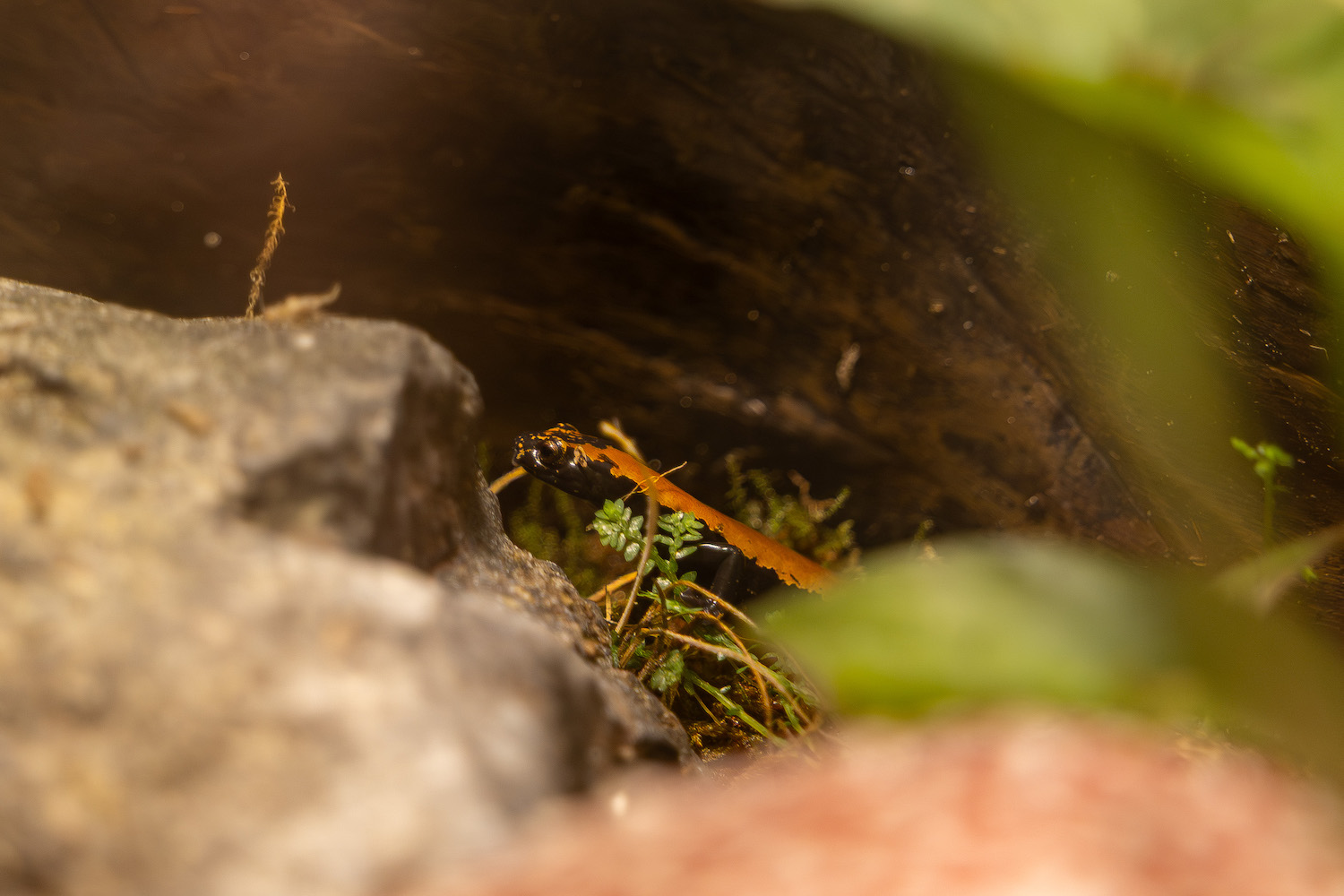
Broad footed salamanders ypically reaches lengths of 2.8 – 4.7 inches (7-12cm). Their bodies are a darker brown with a brighter reddish brown or orange stripe along the top of their entire body.
The feet of all Bolitoglossa salamanders are webbed and work almost like suction cups. This allows them to grip and climb wet leaves, trees, and other vertical surfaces.

Habitat

Humid and moist forest areas

Diet

Insects and other small invertebrates

Life History

They are nocturnal, living within rotting logs or large plants.
They are a direct-developing species, hatching from eggs as a fully formed salamander without any sort of larval stage (eg. tadpoles).

IUCN Status

Least Concern

Ecosystem & Cultural Importance

Broad footed salamanders greatest threat is habitat loss due to housing and urban areas.
Belize, Costa Rica, El Salvador, Guatemala, Honduras, Mexico, Nicaragua, Panama
This animal is not found on the Oregon Coast. It can be found at the Oregon Coast Aquarium as part of our temporary exhibit Amazon Basin: Adventure for the Senses.
They have no lungs, instead breathing entirely through their skin.
Much like frogs, they have a projectile tongue which will shoot out to catch prey

Citations & Other Resources