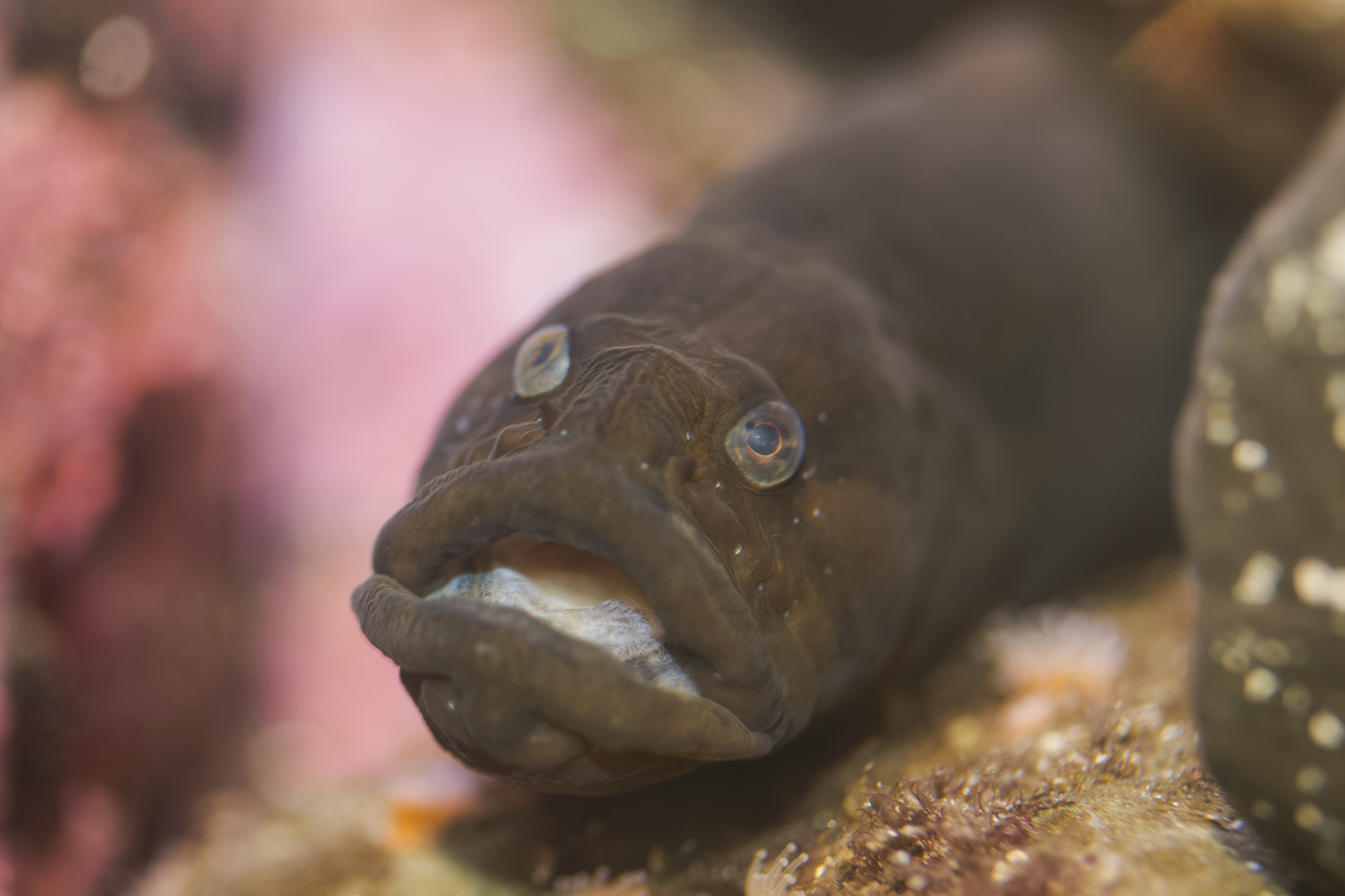
Long, eel-like body that is reddish-brown to black in color and has tiny pectoral fins. The head has three dark bands with bright outlines extending from the eyes. The head has a bluntly rounded snout and large, high-set eyes.
Habitat
In tidepools from the lower limit of the intertidal and subtidally over gravel and rocky areas to shallow subtidal.
Diet
Red and green algae, surfgrass, seaweed, worms, snails, and zooplankton including copepods, crustacean larvae, echinoderm larvae, mysis shrimps.
Life History
These fish are oviparous. A female produces between 500 and 8,000 white or yellow eggs. She lays these as several clumps of eggs that will then be guarded by males under rocks in the intertidal. Each egg mass is between 8 and 20 inches in diameter. At hatching, larvae are between 0.3-0.4 inches long. Eventually fully grow up to 13.75 inches and live up to 15 years.
IUCN Status
Not Evaluated
Ecosystem & Cultural Importance
Black pricklebacks feed their predators including whitespotted greenlings, steller sea lions, minks, and garter snakes.
Love, Milton S. Certainly more than you want to know about the fishes of the Pacific Coast: a postmodern experience. Really Big Press: Santa Barbara. 2011. 649 pp. ISBN 978-0-9628725-6-3
We use cookies to improve your experience and see how our guests are navigating the website. If this is alright by you, hit 'Accept All', or 'Settings' to customize and learn more.
Read our cookie policy