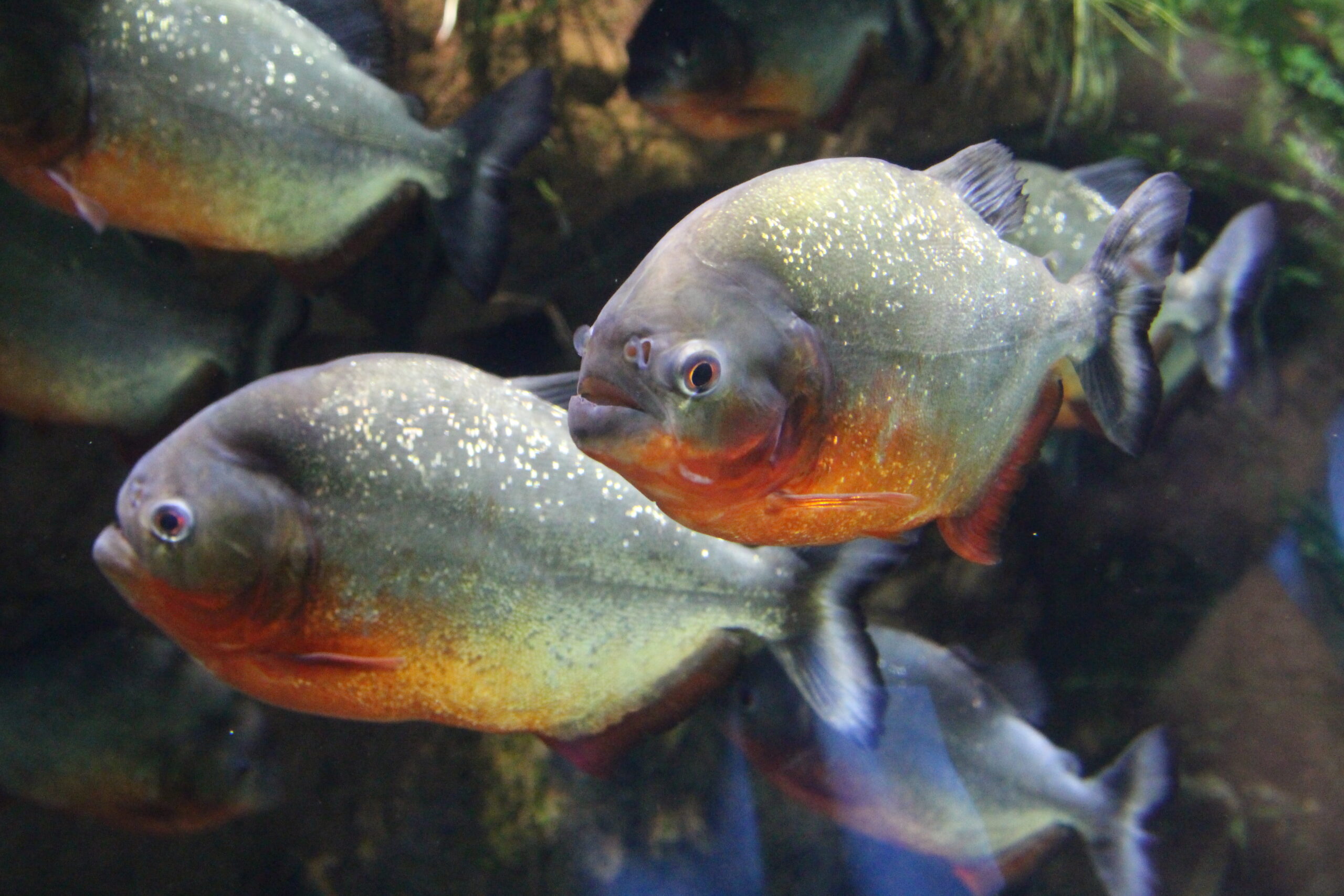
12-14 inches long; up to 4 pounds. Piranhas are often thought of as dangerous carnivores, but in reality the majority of piranha species are vegetarians. The red-bellied piranha is one of the few carnivorous species. And even so, they are primarily scavengers – eating food left behind by other predators.
Beneath their prominent foreheads, piranhas have strong jaw muscles connected to a short, robust lower jaw lined with sharp, triangular teeth that interlock precisely with those on the upper jaw. This structure enables them to deliver powerful bites, capable of slicing through bone! However, even with these vise-like jaws, red-bellied piranhas are not typically considered dangerous to people.
Habitat
Inland freshwater rivers, wetlands, floodplains, and flooded forests.
Piranha eggs will hatch within only a couple of days of being fertilized, and will hide in the river plants until they are large enough to defend themselves against predators.
IUCN Status
Least Concern
Ecosystem & Cultural Importance
They are often utilized as food in local regions, and are found often in the pet trade and in Aquariums.
This animal is not found on the Oregon Coast. It can be found at the Oregon Coast Aquarium as part of our temporary exhibit Amazon Basin: Adventure for the Senses.
We use cookies to improve your experience and see how our guests are navigating the website. If this is alright by you, hit 'Accept All', or 'Settings' to customize and learn more.
Read our cookie policy